

Products
Understanding Basic Traffic Signs


Understanding Basic Traffic Signs
Used to the constant honking in Vietnam, you might be surprised by the silence when driving in the US. Real-world data shows that American traffic relies entirely on recognizing US traffic signs rather than intuitive flexibility. Accidentally ignoring a small overhead sign can cost you hundreds of dollars in unjust fines.
To drive confidently in a foreign land, you absolutely don't need to translate every unfamiliar English word. The practical application of US traffic laws reveals an incredibly simple core survival rule: "Shape + Color = Meaning."
Decoding the Visual Language of Colors and Shapes
Driving at highway speeds in the US leaves little time to read text. Fortunately, our brains process colors much faster than words. Based on MUTCD standards, the clear regulations regarding the meaning of colors and shapes of US road signs help drivers easily recognize situations from afar without needing translation.
This visual language is highly logical: diamond-shaped signs always warn of hazards ahead, while vertical rectangles display mandatory regulations. You just need to remember five core color codes:
Red: Absolute stop or prohibited.
Yellow: Hazard warning.
White: Legal regulations (like speed limits).
Orange: Construction zones.
Green: Directional guidance and exits.
Memorizing this code makes driving much easier, allowing you to intuitively hover over the brake when spotting an orange sign.
STOP Sign Rules and Prohibitions: How to Avoid Expensive Tickets
Unlike the habit of just slowing down in Vietnam, encountering a STOP sign in the US requires a complete stop (Full Stop) for about 3 seconds to avoid a hefty ticket. Conversely, with a triangular Yield sign, you only need to slow down and give the right-of-way to other vehicles; a full stop is not mandatory if the road is clear.
At small intersections in residential areas, the 4-way STOP rule is extremely common. To prevent traffic jams and collisions, follow these three civilized steps:
Full stop: The vehicle must come to a complete halt behind the white line.
Observe arrival order: Mentally note the sequence of vehicles arriving at the intersection.
Proceed in order: First to arrive, first to go; if arriving simultaneously, yield to the vehicle on the right.
Another crucial privilege: US laws generally allow right turns on red after a full stop and careful observation. However, this action becomes illegal if the corner features a No Turn On Red sign.
Hazard Warnings and School Zones: Reading the Road Like a Local
A major difference between Vietnamese and US traffic signs is the heavy use of abbreviations. If you see a yellow diamond sign reading "PED XING," don't panic-"XING" simply means "Crossing." Pay special attention to School Zone signs, which are yellow-green pentagons. In these areas, you must reduce your speed to 15-20 mph (about 24-32 km/h) to protect students and avoid double fines.
Right on the pavement, painted lines silently issue commands. Understanding the meaning of yellow and white road markings in the US helps prevent accidents: white lines separate lanes moving in the same direction, while yellow lines divide opposing traffic. You are only allowed to cross lanes to pass where the line is dashed, and it is strictly prohibited to cross a solid line.
Conquering the Interstate: Exit Signs and the Numbering System
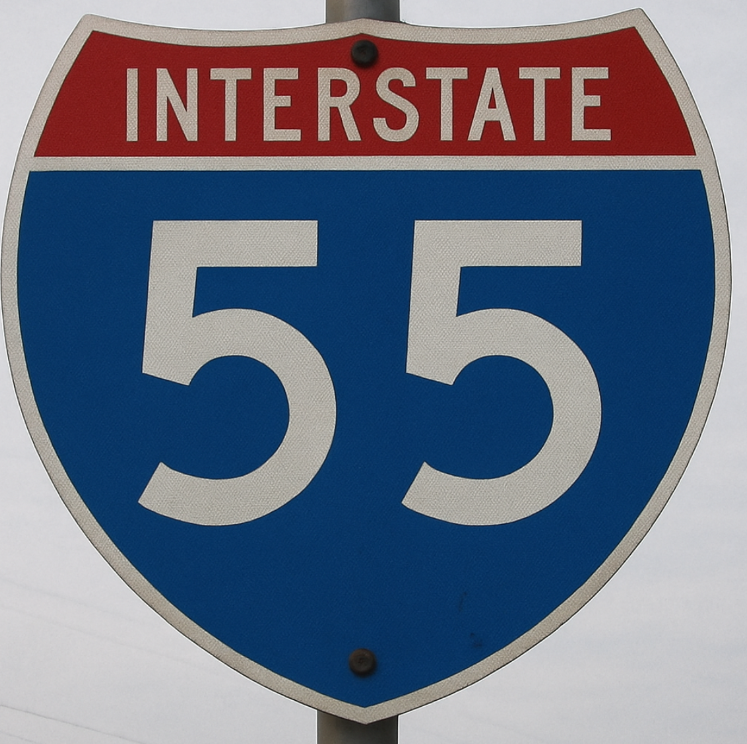
Driving on US highways at 70-80 mph might seem intimidating at first, but everything is organized logically. The prominent red, white, and blue shield is the identifying mark of the Interstate highway system. To never drive in the wrong direction, remember this simple numbering rule:
Odd numbers (e.g., I-5, I-15): Routes running North-South.
Even numbers (e.g., I-10, I-40): Routes running East-West.
Knowing your direction, you must recognize green highway exit signs. A helpful tip: the number on the Exit sign usually corresponds to the mile marker, helping you proactively change lanes early without sudden braking. If you need gas or a rest stop, blue service signs along the road will guide you to the right place.
Street Parking in the US Without Getting Towed
Safe parking in major cities requires decoding complex signs. Reading US street parking signs is quite logical: always prioritize looking at the directional arrows and restricted hours. Avoid "Tow-Away Zones" at all costs to prevent heavy US traffic violation fines and exorbitant vehicle recovery fees.
Even without signs, the curb colors system represents mandatory rules you must remember. Red curbs mean absolutely no parking, white or yellow are for quick pick-ups/drop-offs, green limits the parking duration, and blue is exclusively for disabled parking.
A 3-Step Roadmap to Becoming a Confident Driver in the US
Instead of getting confused by unfamiliar English signs, mastering the core "color language" transforms your driving experience. To quickly build your US driving experience, start with these three immediate actions:
Learn common abbreviations (like XING, HOV, PED).
Observe the curbs (pay attention to painted sidewalk colors when parking).
Always completely stop at STOP signs (even when the road is empty).
When hitting the road, use Google Maps for audio navigation alerts, reducing stress and giving you time to process unfamiliar signs. Mastering these rules not only protects your wallet but is the best way to ensure US traffic safety. For official guidance and sign references, you can also check the Manual on Uniform Traffic Control Devices (MUTCD) and the NHTSA road safety resources.
Related Blogs
-
 Used to the constant honking in Vietnam, you might be surprised by the silence when driving in the US. Real-world data shows that American traffic relies entirely on recognizing US traffic signs rather than intuitive flexibility. Accidentally ignoring a small overhead sign can cost you hundreds of dGalvanized Steel Plate/Sheet
 -
 Applications of Besi Hollow in ConstructionBesi Hollow is transforming the construction industry. Known for its lightweight and durable nature, it is a game-changer.This hollow structural steel is versatile and adaptable. It meets the demands of modern construction with ease.From residential to commGalvanized Steel Pipe/Tube
 -
 Tips Memilih Toko Stainless yang TepatChoosing the right stainless steel store is crucial for quality assurance. In Indonesia, the market offers a wide range of options. However, not all stores provide the same level of service and product quality.Understanding your specific needs is the first step.Stainless Steel Coil/Strip
