


Products
Current Steel Cost Trends: 1 Ton Price Insight


How much does 1 ton of steel cost
Whether you are planning a massive commercial warehouse or engineering a custom home, steel is the undeniable backbone of modern construction. It offers unparalleled strength, durability, and architectural flexibility. But when it comes time to plan your project budget, a vital question emerges: how much are you actually going to pay?
Understanding the cost of structural steel per ton is the foundational metric every developer, contractor, and DIY builder must grasp. However, a single “ton of steel” is not a flat-rate commodity. The final price you pay depends on the material/grade you choose (what the steel is), the product form and size (what shape it is and how much processing it needs), and the market and supply chain (where and when you buy it).
Below, you’ll find the key pricing drivers to label clearly in quotes and invoices, plus a plain-language explanation of the most common steel “materials” used in construction and fabrication.
First: What exactly is “1 ton of steel”?
When customers ask for the cost of 1 ton of steel, they’re usually referring to one of these categories:
Structural sections (I-beams/H-beams, channels, angles, hollow sections) — see: Structural steel products
Plate (flat steel cut into parts)
Rebar (reinforcing bars for concrete)
Sheet/coil (thin steel, often for cladding or fabrication)
Stainless or alloy steel (special performance requirements)
Important: two quotes can both say “1 ton,” but the price can be very different if the steel grade, thickness, coating, or fabrication requirements differ.
| Product Name | Material | Size Specification | Price (USD/Ton) |
|---|---|---|---|
| Rebar (Grade 60) | HRB400E | Φ12-Φ32mm | $490 - $510 |
| Hot Rolled Coil (HRC) | Q235B | 2.0-12.5×1000-2000mm | $495 - $515 |
| Cold Rolled Sheet | SPCC | 0.3-3.0×1000-1250mm | $570 - $610 |
| Galvanized Steel Sheet | DX51D+Z | 0.4-2.0×1000-1250mm | $520 - $560 |
| Medium Plate | Q355B | 6-60×1500-3000mm | $500 - $530 |
| H-beam | SS400/Q235B | 100×100-400×400mm | $510 - $550 |
| Angle Steel | Q235B | 25×25-100×100mm | $490 - $520 |
| Wire Rod | HPB300 | Φ5.5-Φ14mm | $480 - $510 |
| Stainless Steel 304 | SUS304 | 1.0-3.0×1000-2000mm | $1,800 - $2,000 |
| Carbon Steel Pipe | ASTM A53 | Φ21.3-Φ508mm | $570 - $670 |
The main factors that change the price per ton
1) Material/grade (specification)
The “material” is the steel’s standard/grade, which tells you its minimum strength, chemistry, and intended use. Common examples include mild carbon structural steel (like ASTM A36 or EN S275/S355), rebar grades, and stainless grades (like 304/316). Higher-strength or corrosion-resistant grades typically cost more per ton.
2) Size, thickness, and dimensions
Steel is priced by weight, but dimensions still matter because they influence mill availability, cutting waste, transport, and fabrication time. For example:
Thicker plate can be more expensive per ton due to mill constraints and demand.
Very large or uncommon section sizes may have longer lead times and higher premiums.
Cut-to-length or custom sizes add processing costs and can increase the effective cost per ton.
3) Product form (beam vs. plate vs. rebar vs. sheet)
A ton of rebar is not priced the same as a ton of wide-flange beams or a ton of stainless sheet. Each product form has different production methods, demand patterns, and scrap yields.
4) Coatings and surface requirements
Hot-dip galvanizing, painting systems, or special surface prep add cost and can also change the shipped weight. Understanding hot-dip galvanized steel pricing factors is vital because galvanizing prices fluctuate based on the current cost of zinc and coating requirements. For a plain-language overview, see: American Galvanizers Association (AGA).
5) Fabrication, testing, and certification
Once you move from “raw steel” to “delivered fabricated steel,” you add cutting, drilling, welding, fit-up, QA/QC, and documentation (like MTRs). These can be a bigger cost driver than the raw ton price for complex projects.
6) Location, logistics, and timing
Freight, port/land transport, storage, and lead time can materially change the final figure. In any market, including Saudi Arabia, import conditions, shipping schedules, and local stock availability can all shift the delivered cost per ton.
Plain-language guide to common steel materials (and why their cost differs)
Carbon (mild) structural steel (e.g., ASTM A36, EN S275/S355)
This is the most common choice for building frames, platforms, and general fabrication. It’s widely available and relatively cost-effective. Higher-strength variants (for example, moving from a lower to a higher strength grade) may reduce the required weight in some designs, but the per-ton price can be higher.
Structural hollow sections (HSS/SHS/RHS)
These are square, rectangular, or round tubes used in frames, columns, and architectural steelwork. Their price per ton can differ from open sections (like I-beams) because of manufacturing and availability for specific sizes and wall thicknesses.
Steel plate (carbon steel plate)
Plate is used for base plates, gussets, brackets, machinery parts, and tanks. Thickness, flatness requirements, and how much cutting you need will affect the final cost. A carbon steel plate price per pound breakdown can be useful for estimating cut parts, but remember that cutting waste and processing charges can change your effective cost per ton.
Rebar (reinforcing steel)
Rebar is designed for concrete reinforcement and is often priced differently than structural sections. Grade, bar diameter, and whether it is plain or deformed influence price, as do project demand cycles (infrastructure and building booms can move rebar quickly).
Galvanized steel (coated carbon steel)
Galvanized steel is carbon steel with a protective zinc coating to resist corrosion. You are paying for the base steel plus coating and processing. It’s common for outdoor structures, fencing, and exposed elements where corrosion risk is high.
Stainless steel (e.g., 304 and 316)
Stainless is used where corrosion resistance and appearance matter (food facilities, coastal or chemical exposure, architectural applications). It typically costs much more per ton than carbon steel because of alloying elements (like nickel and chromium) and different market dynamics.
Weathering steel (where applicable)
Weathering steel forms a protective “patina” in certain environments and can reduce painting needs. It may carry a premium and is not suitable for every climate or exposure condition, so it’s chosen for specific design intent and environments.
Alloy steels (performance-focused steels)
Alloy steels (with added elements like chromium, molybdenum, etc.) are selected for wear resistance, higher strength, or heat performance. They are common in industrial equipment and can be significantly more expensive than mild steel.
The Baseline: Breaking Down Material Costs
When determining the price of steel, you have to look at the raw materials first. Interestingly, the cost of scrap steel per ton directly influences the final price of brand-new steel. Because a large share of modern steel is produced in Electric Arc Furnaces (EAF) using recycled materials, scrap prices act as a baseline for the entire industry.
If you are budgeting for a standard commercial project, keeping an eye on the market price of common structural grades will give you a strong baseline for framing costs.
To get more granular with your budget, it helps to look at a carbon steel plate price per pound breakdown. Raw carbon steel plates can vary widely depending on thickness and mill capacity. When you convert to a per-ton number, remember the “all-in” cost changes once you add cutting, welding, coating, testing, delivery, and waste.
Market Dynamics: Navigating Price Fluctuations
If you've sourced building materials recently, you are likely asking: why are steel prices fluctuating right now?
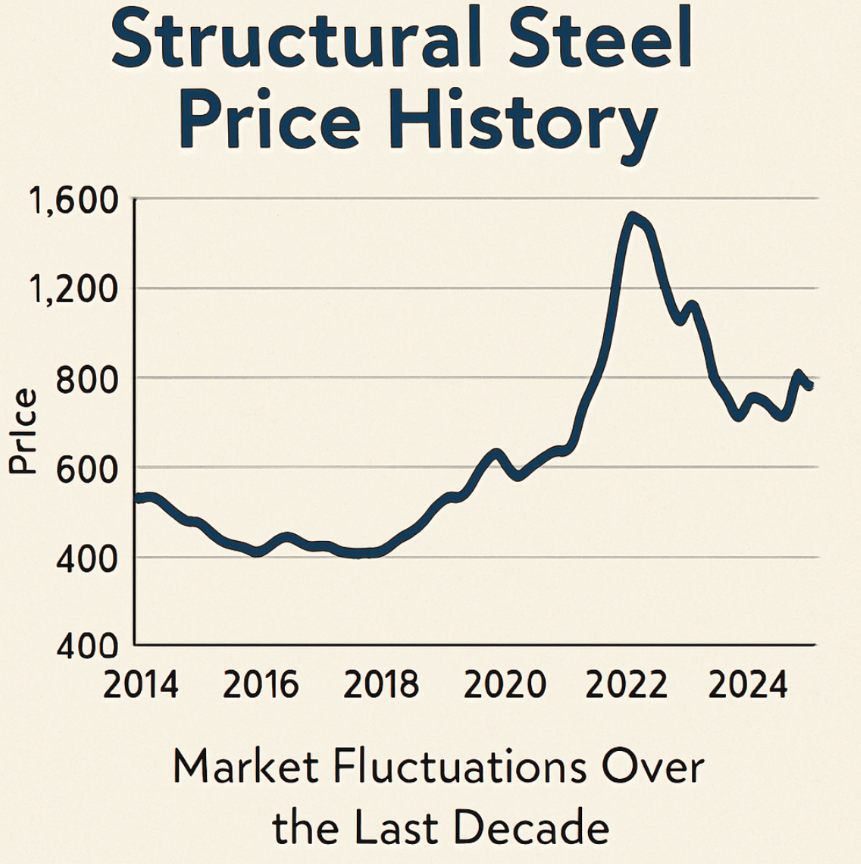
The answer lies in macroeconomics. A look back at steel price history shows a commodity that experiences cyclical spikes driven by energy costs, global demand, and geopolitical events. For industry market snapshots and global context, see: World Steel Association.
For example, the global iron ore price impact on construction materials can be significant. Even though recycling is prominent, iron ore remains a critical ingredient in global steelmaking. When raw ore prices surge in major mining regions, the cost of steel globally often rises in tandem. You can track major commodity benchmarks here: World Bank commodity markets.
Furthermore, buyers must weigh the difference in price between domestic and imported steel. While imported steel might look cheaper on a spreadsheet, buyers should factor in duties, shipping costs, lead times, and the risk of delays. Often, the hidden costs of imported steel close the price gap with locally sourced options.
Beyond Raw Materials: Fabrication and Installation
Raw metal sitting at a mill is only step one. To turn that metal into a usable building frame, you have to factor in fabrication and installation.
Learning how to estimate structural steel fabrication labor costs is critical. Fabrication involves cutting beams to size, drilling bolt holes, and welding connections. Fabricators typically charge based on the complexity of the design and the hours required. Additionally, savvy estimators always budget for the average waste percentage in steel fabrication, which usually sits between 3% and 5%. Factoring this waste into your initial tonnage estimate prevents costly mid-project material shortages. For additional fabrication best practices, see: The Fabricator.
Once the fabricated steel arrives at your job site, the expenses shift to construction. You will need to account for installation costs, which may include heavy crane rentals, site logistics, and the hourly wages of skilled ironworkers who erect the frame.
Material Choices and Project Types
Not all structural metal is identical, and choosing the right type for your specific project dramatically alters the cost per ton.
Structural vs. Cold-Formed Steel
Doing a structural steel vs cold-formed steel cost comparison can save you thousands. While traditional hot-rolled structural steel is mandatory for heavy load-bearing columns and primary commercial frames, cold-formed steel (light-gauge steel) is significantly lighter and often cheaper. It is an excellent, cost-effective alternative for secondary framing, interior partitions, and lightweight roofing structures.
Residential Framing vs. Commercial
For home builders, calculating tonnage for residential framing projects is a unique challenge. Unlike a heavy-duty commercial build, residential projects rely on lighter I-beams, flitch plates, and smaller support columns. Over-engineering a residential frame with excessively heavy steel is a common mistake that inflates the cost per ton.
Pre-Engineered Alternatives
If you are looking for efficiency, explore the pre-engineered metal building cost advantages. Because these buildings are designed with standardized, mass-produced components, both fabrication labor and material waste are reduced, offering a more predictable overall cost.
Quality, Finishes, and Procurement
Steel needs to be protected, verified, and delivered on time—all of which impact your final budget.
Coatings and Finishes: If your steel will be exposed to the elements, you must budget for protective coatings.
Quality Assurance: Never compromise on material integrity. Using a standard guide to reading steel mill test reports (MTRs) helps ensure that the chemical composition and physical yield strength of the steel delivered match what you paid for.
Logistics: Time is money. Mitigating supply chain delays in steel procurement by ordering materials in advance and building relationships with reliable suppliers can help avoid project standstills.
Actionable Ways to Reduce Steel Building Construction Expenses
You can’t control the global commodities market, but you can control your project design. Here are proven ways to reduce steel building construction expenses:
Label the steel clearly in every quote: grade/spec, product form, size/thickness, coating, and delivery terms. This prevents “apples-to-oranges” pricing.
Involve fabricators early: Bring a steel fabricator into the design phase. They can suggest minor structural tweaks that reduce cutting and welding time.
Standardize sizes: Designing a building that uses repetitive, standard-sized members rather than custom profiles can lower both material premiums and labor.
Limit complex connections: Welding is expensive. Designing joints that can be bolted together on-site rather than requiring complex field-welding can reduce installation labor.
Optimize weight: Work with a structural engineer to ensure your members are as heavy as they need to be to meet codes, without unnecessary excess tonnage.
The Bottom Line
So, how much does one ton of steel cost? The only accurate answer is: it depends on the material/grade, the product form, the size/thickness, and the “all-in” scope (raw steel vs. fabricated, coated, delivered, and installed).
By monitoring market trends, understanding the true costs of fabrication, and labeling specifications clearly, you can navigate the steel market with confidence and keep your next construction project within budget.
Related Blogs
-
 How much is a coil of Colorbond?Price for a Colorbond coil isn’t one fixed number. It depends on the paint system (including paint film thickness), the substrate/material, the base metal thickness, and the coil size you need. It also depends on where you’re buying from and whether the material is stGalvanized Steel Coil/Strip
 -
 How much does 1 ton of steel costWhether you are planning a massive commercial warehouse or engineering a custom home, steel is the undeniable backbone of modern construction. It offers unparalleled strength, durability, and architectural flexibility. But when it comes time to plan your project budg
 -
 Understanding 316 Stainless Steel Tube DimensionsIf your customers mainly need quick sizing, a table is the fastest way to choose the right 316 stainless steel tube. Use the charts below as a practical starting point, then confirm the exact specification with your supplier and the governing standardStainless Steel Pipe/Tube
